
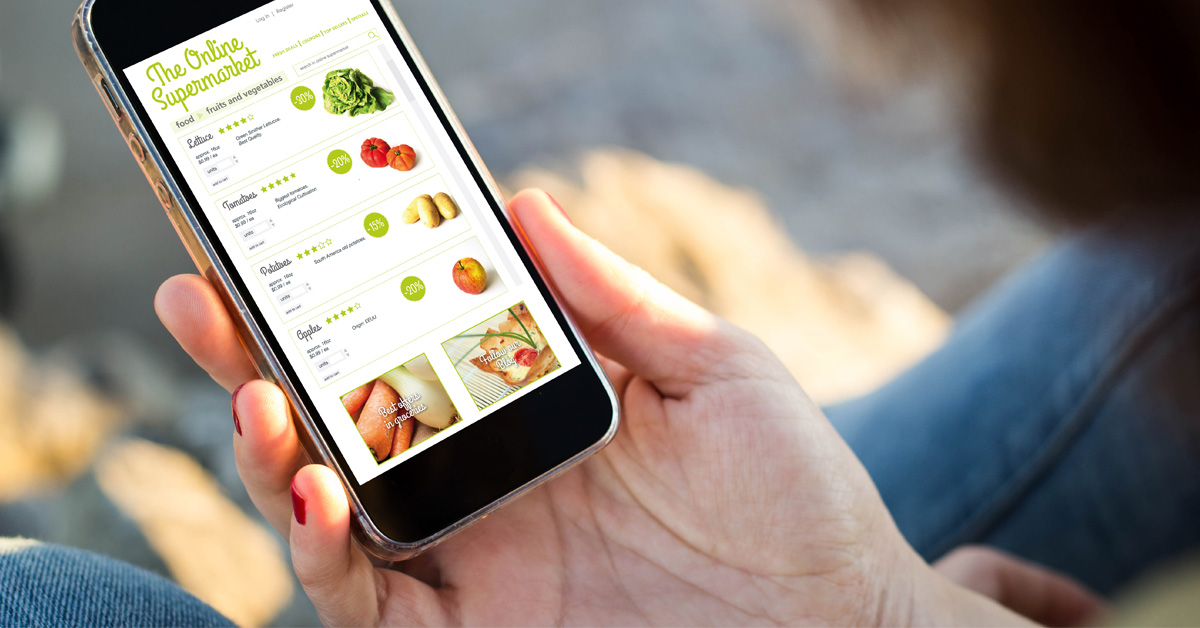
E-commerce has dominated the retail market since Amazon came onto the scene. In fact, according to a 2018 survey, 30% of respondents said that they did their online grocery shopping through Amazon. This comes after Amazon’s 2017 acquisition of the organic grocery chain, Whole Foods. This acquisition allowed for Amazon’s Prime service to expand to AmazonFresh, Prime Pantry, and Prime Now. Competitors aren’t reaching anywhere near Amazon’s market share with mass merchants combined only accounting for 13% of online grocery sales in this survey. This gap has forced retailers like Walmart to step up their services and consumer experiences.
In response to Amazon’s overwhelming numbers in the grocery category, Walmart has shifted its focus from driving traffic to the brick and mortar stores to emphasizing online ordering and pick up as well as their home delivery options. Currently, Walmart offers online delivery in 50 markets with a goal of having delivery in 100 markets covering 40% of U.S. households. Currently, Walmart offers pick up in 2,000 locations with a goal to grow by 140 more locations in 430 markets, which will cover 69% of U.S. households. This push is projected to increase Walmart’s market share to 17% by 2025 from their current 11% share.
To compare how tight the race is to dominate online grocery sales, Amazon in 2017 had sales of $2 billion while Walmart had sales of $1.78 billion in just. There is a third factor to online grocery delivery’s huge growth in the last year. The independent company, Instacart currently has a presence in 220 markets due to their partnerships with larger retailers like Kroger, Albertsons, and Costco. Instacart is currently has a 10% market share in most locations with a goal to double that in 5 years. Aside from Walmart, most major retailers use partnerships with apps like Instacart in order to compete with Amazon in the e-commerce space.
Want to take advantage of e-commerce for your business? Let’s connect.


